Hist 197: Environmental Justice in California
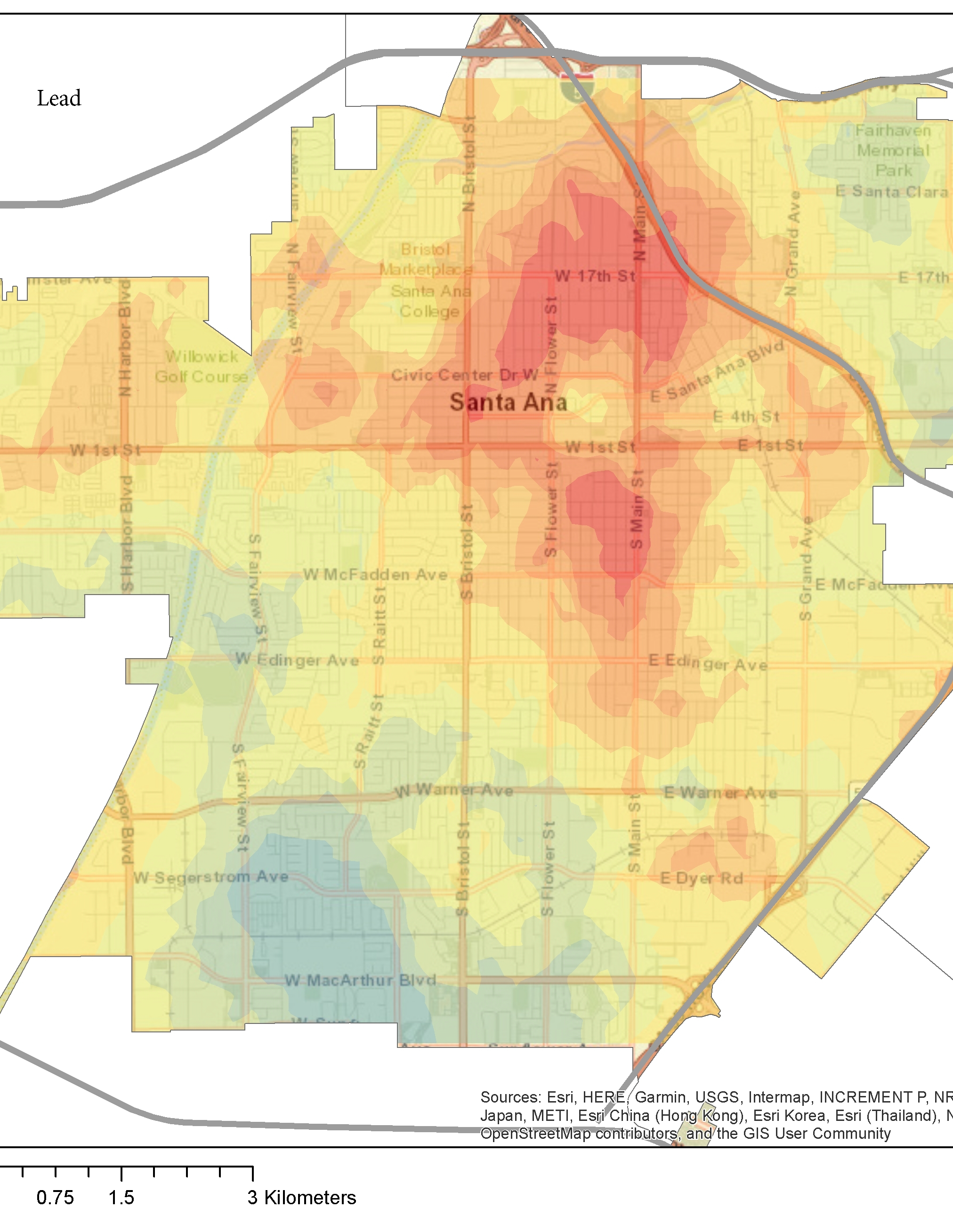
This course connects current environmental justice issues in California to the history of capitalism and racism. It relates past and present forms of environmental harm to the evolution of corporate power, the uneven expansion of suburban development, and the incidence of racism in policymaking. It will also address how environmental struggles intersect with labor exploitation.
As a class, we will discuss several environmental-justice issues, such as soil contamination, access to water, and excessive heat. We will focus our analysis, however, on the history of lead contamination, its multiple sources, and the impact that it had in Southern California communities. We will discuss the history of lead as a commodity, how it was manufactured, distributed, and advertised. We will also talk about the many structural factors that shaped lead poisoning as an issue, including redlining and segregation, the rise of fossil-fuel cultures, and divestment in public health.
As a student, you will gain conceptual and practical skills to frame environmental struggles as part of broader structures of exploitation and power. You will also have the opportunity to develop multimedia projects in collaboration with Orange County Environmental Justice (a non-governmental organization currently working on lead contamination and bioremediation in Southern California).
Dive in!

This audio series deals directly with our main case study, so if you are curious about the class, tune in using Spotify, Apple Podcasts, etc.
Topics and Readings
REQUIRED TEXTS: All readings will be available online (either on canvas or through online library access)
Week 1
Introduction
Lead in Southern California today.
- Rubio, Juan Manuel. “Air, Metal, and Earth,” 2021. Episode one. http://historianrubio.com/airmetalandearth/. (Podcast)
- Arablouei, Ramtin, Rund Abdelfatah, Julie Caine, Lawrence Wu, Laine Kaplan-Levenson, Schuyler Swenson, Kumari Devarajan, Victor Yvellez, and Mansee Khurana. “There Are No Utopias.” NPR, February 24, 2022, sec. Throughline. https://www.npr.org/2022/02/20/1082030426/there-are-no-utopias. (Podcast)
Week 2
Extraction
Lead mining and the integration of the industry.
- “Perch of the Devil | Kanopy.” Accessed December 23, 2025. https://www.kanopy.com/en/ucr/watch/video/166379.
Week 3
Commodities
Lead household products and marketing.
- Markowitz, Gerald, and David Rosner. “‘Cater to the Children’: The Role of the Lead Industry in a Public Health Tragedy, 1900-1955.” American Journal of Public Health 90, no. 1 (January 2000): 36–46. https://doi.org/10.2105/ajph.90.1.36.
- Rubio, Juan Manuel. “Air, Metal, and Earth,” 2021. Episode two. http://historianrubio.com/airmetalandearth/. (Podcast)
Week 4
Housing and Urban Development
Lead-paint, segregation, and housing justice.
- Housing Segregation and Redlining in America: A Short History, 2018. https://www.youtube.com/watch?v=O5FBJyqfoLM. (Video)
- NPR. “‘The Color Of Law’ Details How U.S. Housing Policies Created Segregation,” May 17, 2017, sec. Author Interviews. https://www.npr.org/2017/05/17/528822128/the-color-of-law-details-how-u-s-h ousing-policies-created-segregation. (Interview)
Supplemental material:
- The Dig. “New Deal Ruins with Edward Goetz.” https://thedigradio.com/podcast/new-deal-ruins-w-edward-goetz/ (podcast)
Week 5
Resistance
Social movements, civil rights, and lead poisoning.
- Rosner, David, and Gerald Markowitz. “From Personal Tragedy to Public Health Crisis.” In Lead Wars: The Politics of Science and the Fate of America’s Children. University of California Press, 2014. https://www.ucpress.edu/book/9780520283930/lead-wars.
- “Diseases of Poverty.” In The Young Lords: A Radical History. The University of North Carolina Press, 2020. https://muse.jhu.edu/pub/12/monograph/book/72262.
Week 6
Infrastructure and Petrocultures
Post-war suburban development and the use of leaded gasoline.
- Nielsen, Carrie. “Where the Lead Came From.” In Unleaded: How Changing Our Gasoline Changed Everything. New Brunswick: Rutgers University Press, 2021.
- Rubio, Juan Manuel. “Air, Metal, and Earth,” 2021. Episode four. http://historianrubio.com/airmetalandearth/. (Podcast)
Week 7
Science
Corporate science on lead research.
- Nielsen, Carrie. “Getting the Lead Out.” In Unleaded: How Changing Our Gasoline Changed Everything. New Brunswick: Rutgers University Press, 2021.
Week 8
Public Health
Lead prevention and the neoliberal reforms in public health of the 1980s
- Rosner, David, and Gerald Markowitz. “The Contentious Meaning of Low-Level Exposures.” In Lead Wars: The Politics of Science and the Fate of America’s Children. University of California Press, 2014. https://www.ucpress.edu/book/9780520283930/lead-wars.
Week 9
Environmental Justice in California
Struggles around lead today.
- Rubio, Juan Manuel. “Air, Metal, and Earth,” 2021. Episode Five. http://historianrubio.com/airmetalandearth/. (Podcast)
Week 10
Student Presentations
- (Final multimedia project due)
