Revolution and Countercultures in Latin America (HIST 30)

This class studies the relationship between countercultures and revolutionary processes in Latin America. It focuses on the 1960s, when intellectuals, artists, and revolutionaries debated Che Guevara’s ideas and grappled with the meaning of his victory during the Cuban Revolution. Many began organizing urban guerrillas to challenge the power of military dictatorships. Others organized student movements and reoriented towards revolutionary goals.
In the 1960s, a rebellious youth was also breaking with dominant ideologies and institutions. Hippism challenged strict gender roles and the oppressive nature of marriage and monogamy. Music festivals created scenarios for protesting inequality and redefining masculinity. The countercultures of sex, drugs, and Rock ‘n Roll circulating throughout Latin America were not, therefore, mere fashionable trends. They were terrains of struggle.
Was there, however, a tension between counterculture and revolution? Some thinkers argued that drugs and Rock and Roll could distract from the work and discipline necessary for revolution. Others pointed to all the ways in which countercultures were helping to undermine the ideological edifice of capitalism and legitimize the revolutionary struggle. In this class we will explore this tension through the lens of revolutionary theory.
Environmental Justice in California (HIST 197)
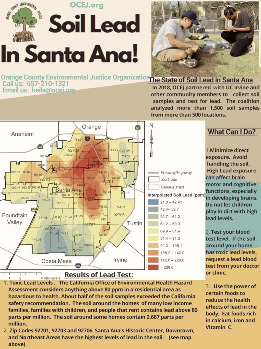
This course connects current environmental justice issues in California to the history of capitalism and racism. It relates past and present forms of environmental harm to the evolution of corporate power, the uneven expansion of suburban development, and the incidence of racism in policymaking. It will also address how environmental struggles intersect with labor exploitation.
As a class, we will discuss several environmental-justice issues, such as soil contamination, access to water, and excessive heat. We will focus our analysis, however, on the history of lead contamination, its multiple sources, and the impact that it had in Southern California communities. We will discuss the history of lead as a commodity, how it was manufactured, distributed, and advertised. We will also talk about the many structural factors that shaped lead poisoning as an issue, including redlining and segregation, the rise of fossil-fuel cultures, and divestment in public health.
As a student, you will gain conceptual and practical skills to frame environmental struggles as part of broader structures of exploitation and power. You will also have the opportunity to develop multimedia projects in collaboration with Orange County Environmental Justice (a non-governmental organization currently working on lead contamination and bioremediation in Southern California).
Environmental Histories of the Americas (HISA 167)
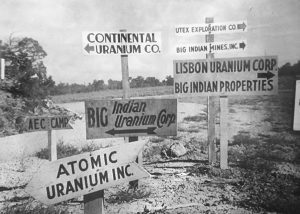
This course studies how workers, Indigenous communities, and urban social movements have organized in the context of past environmental changes. We will focus on a few places in the Americas, including Northeastern Brazil, Navajo Nation, and New York City. We will track the development of capitalism in these areas and both the slow-moving and sweeping environmental changes it produced. Then, we will learn about communities organizing amidst this turmoil: How did they resist exploitation? What sort of contradictions did they face? Through the story of these people, we will enter a world of economic structures and power relations. We will also see the workings of race and gender at play. Some of the questions we will address are: How did the production of commodities and energy transform environments across the Americas? What was the role of racial relations in shaping these developments? How did the legacies of environmental exploitation accumulate over time and how did these legacies affect the experience of people? This course will give you conceptual tools to understand environmental issues and activism today.
